

THE FISH KILL OF 1961
a little further reading!

THE LONGHORN DAM IN 1960
The construction of the Longhorn Dam was completed to provide water for cooling the City of Austin Holly St. Power Plant, and created what became known as “Town Lake” and is now referred to as “Lady Bird Lake.”
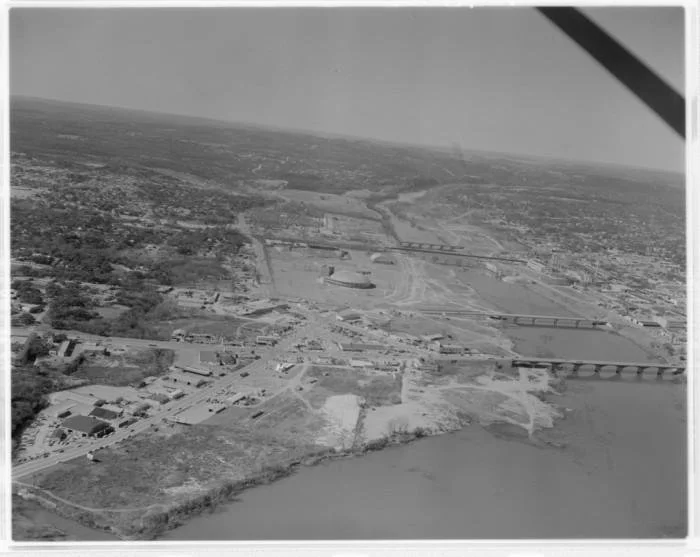
This aerial photo shows the Longhorn Dam shortly after it’s completion in 1960, with glimpses of the surrounding East Austin neighborhood and East Cesar Chavez St.
This is the same bridge that holds today, which you can cross as you drive down N. Pleasant Valley Rd.
THE FISH KILL OF 1961
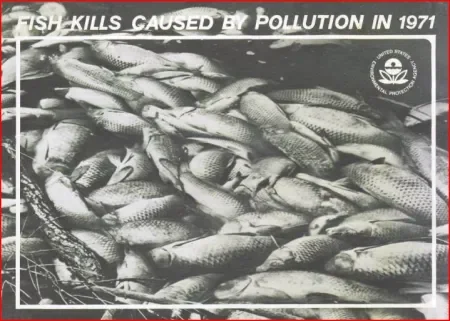
As Michael Barnes wrote in this 2019 Austin American Statesman article, Austin suffered Silent Spring disaster in 1961, recounting details from Rachel Carson’s infamous book:
“‘Shortly after daylight on Sunday morning, Jan. 15, dead fish appeared in the new Town Lake in Austin and in the river for a distance of about five miles below the lake,’ starts Carson’s account, which is based on evidence laid out in the Fish and Game Commission’s “Report of Investigation of the Colorado River Fish Kill, January 1961.”
”It did not take much expertise to surmise that something poisonous had entered the water. ‘By Jan. 21, fish were being killed 100 miles downstream near La Grange,’ the book continues. ‘And a week later, the chemicals were doing their lethal work 200 miles below Austin. During the last week of January, the locks on the Intracoastal Waterway were closed to exclude the toxic waters from Matagorda Bay and divert them into the Gulf of Mexico.’”
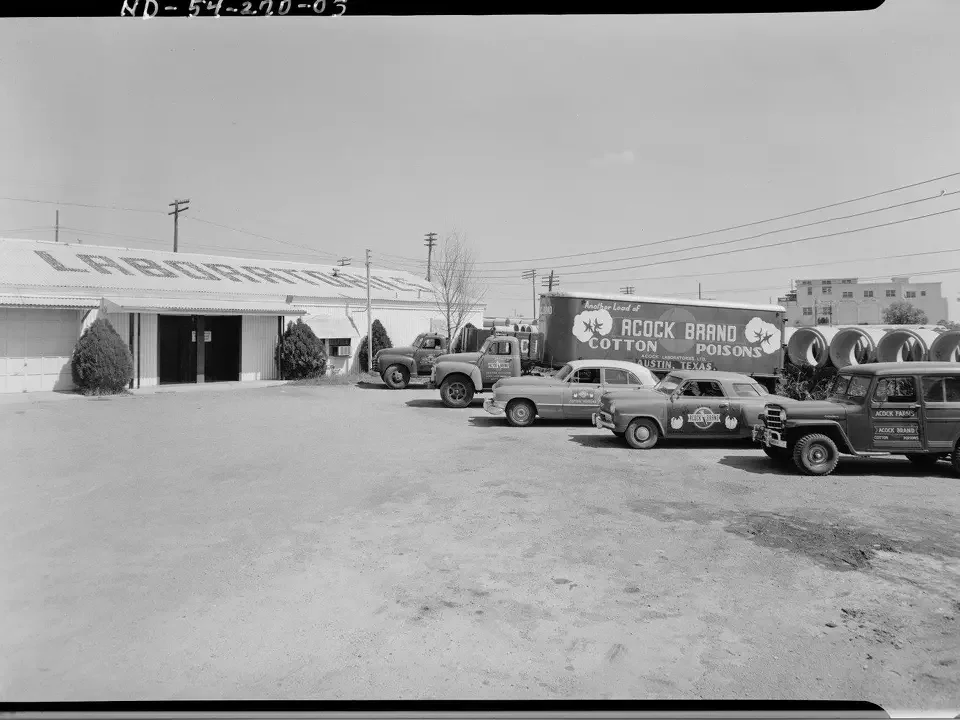
The book — and the article — blame the fish kill on a chemical company named Acock Laboratories. But they weren’t found solely guilty. Their practices certainly played a part, but recent research reveals a more nuanced and complex story.
A COMPLEX CAUSE
As supported by research from Kevin Anderson of The Center for Environmental Research:
John Tilton’s letter provides a firsthand account, and reveals a combination of unintended consequences from old and unmonitored practices, confirmed through this state memo.
Acock Laboratories did dispose of their waste directly into wastewater lines. And, tragically, it was a City of Austin sewage line crew that caused the flushing of Acock Lab’s poisons, while trying to wash away a sewage spill on the riverbank by getting the Tom Miller Dam operators (LCRA) to release water and flush Town Lake.The dam release dislodged the toxins, which had settled into the lake bottom.
THE River’s RESILIENCE
All of this unfolded near the Longhorn Dam, so it didn’t impact much of the “lake” downtown, but the City of Austin and USGS have done lots of core sampling and fish sampling over the decades since the spill. See more here.
They (and Tilton at the end of his letter) marvel at how resilient the river biota was as it quickly recovered from a near total kill. Of course — that is because the Colorado River flushed and diluted the poisons, and the river life above the spill flowed in and restored the river stretch.
This aerial view of Lady Bird Lake from 1962 shows that the river continues to flow with growing changes to our city.