
YOUR GUIDE TO BEING A SCIENTIST.
What is Green Infrastructure?
Low Impact Development (LID) - or “green infrastructure” - is a way of designing communities and managing stormwater that works with nature instead of against it.
It uses natural processes, like filtering water through soil and plants, to reduce flooding, improve water quality, and protect wildlife.
Examples include rain gardens, green roofs, and permeable pavements, which help rainwater soak into the ground rather than run off into streets and drains.
LIVING EXAMPLE: DELL MEDICAL CAMPUS
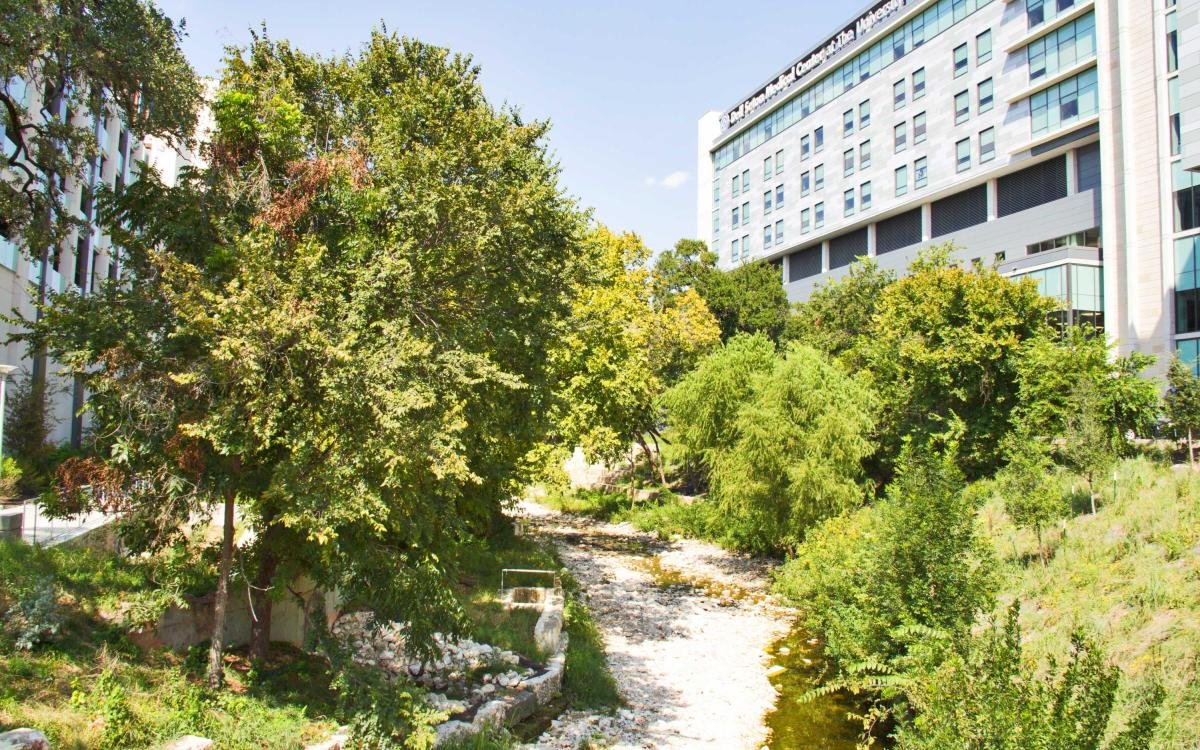
The Dell Medical Campus in Austin serves as a model for Low Impact Development (LID) by integrating natural systems into its design to restore Waller Creek and manage stormwater flowing to the Colorado River sustainably.
The project replaced invasive plants with native vegetation, reduced irrigation by 75%, and uses features like rain gardens, permeable pavements, rainwater harvesting, and green roofs to capture and filter rainwater on site.
Through these efforts, the campus transformed a degraded urban area into a thriving green space that supports both environmental health and community well-being.
SEEK OUT & PHOTOGRAPH
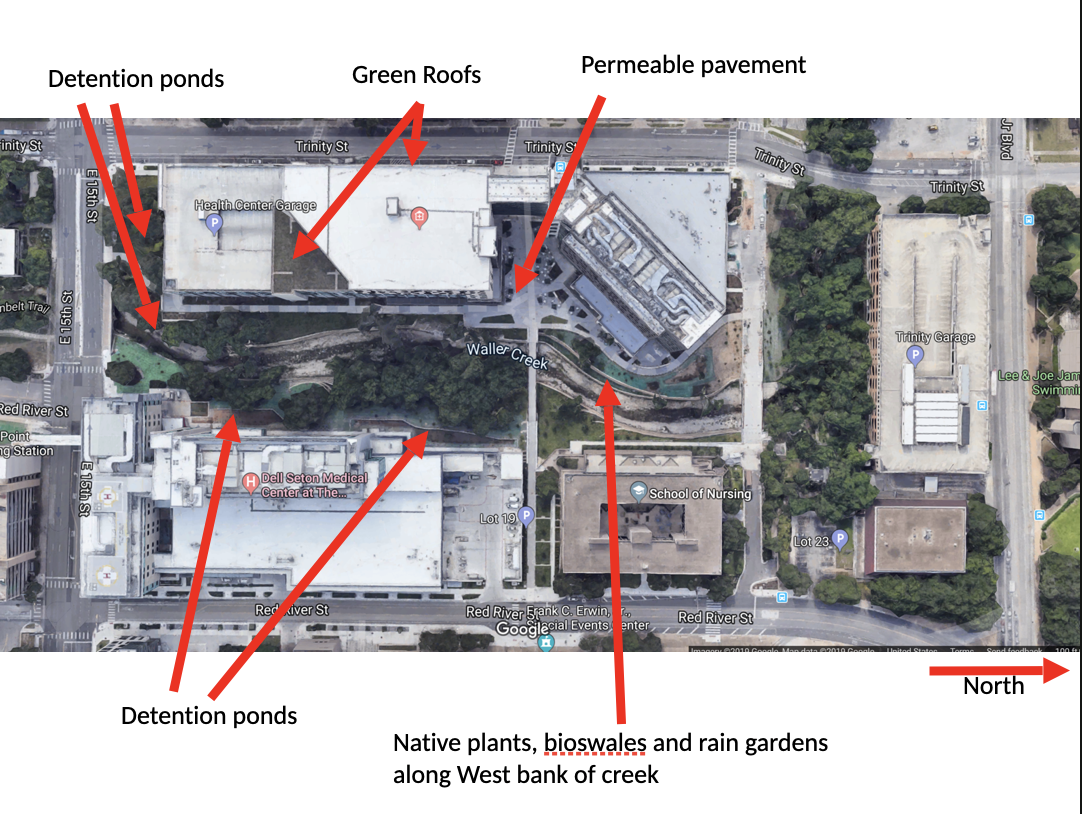
With MLK on the north side and 15th St. on the south, explore the area between Trinity St.and Red River St. Find and photograph one of the many examples of green infrastructure:
Detention ponds are temporary basins that hold stormwater during heavy rain, releasing it slowly to prevent flooding and downstream erosion.
Bioswales are shallow, vegetated channels designed to remove debris and pollution out of surface runoff water.
Permeable pavement lets rainwater pass through to the soil below, reducing runoff and helping recharge groundwater.
Rain gardens are planted with native vegetation that absorb and filter stormwater running off of roofs, streets, or parking lots.
Wildflower meadows help slow runoff, increase soil infiltration, and reduce erosion while supporting pollinators and biodiversity.
The team operates an electric fleet of mowers and power equipment and uses only organic approaches to soil health, plant health care, and weed control. All of these efforts combined led the district to win a SITES Gold Award for sustainable landscape design.
FOR THE FUTURE
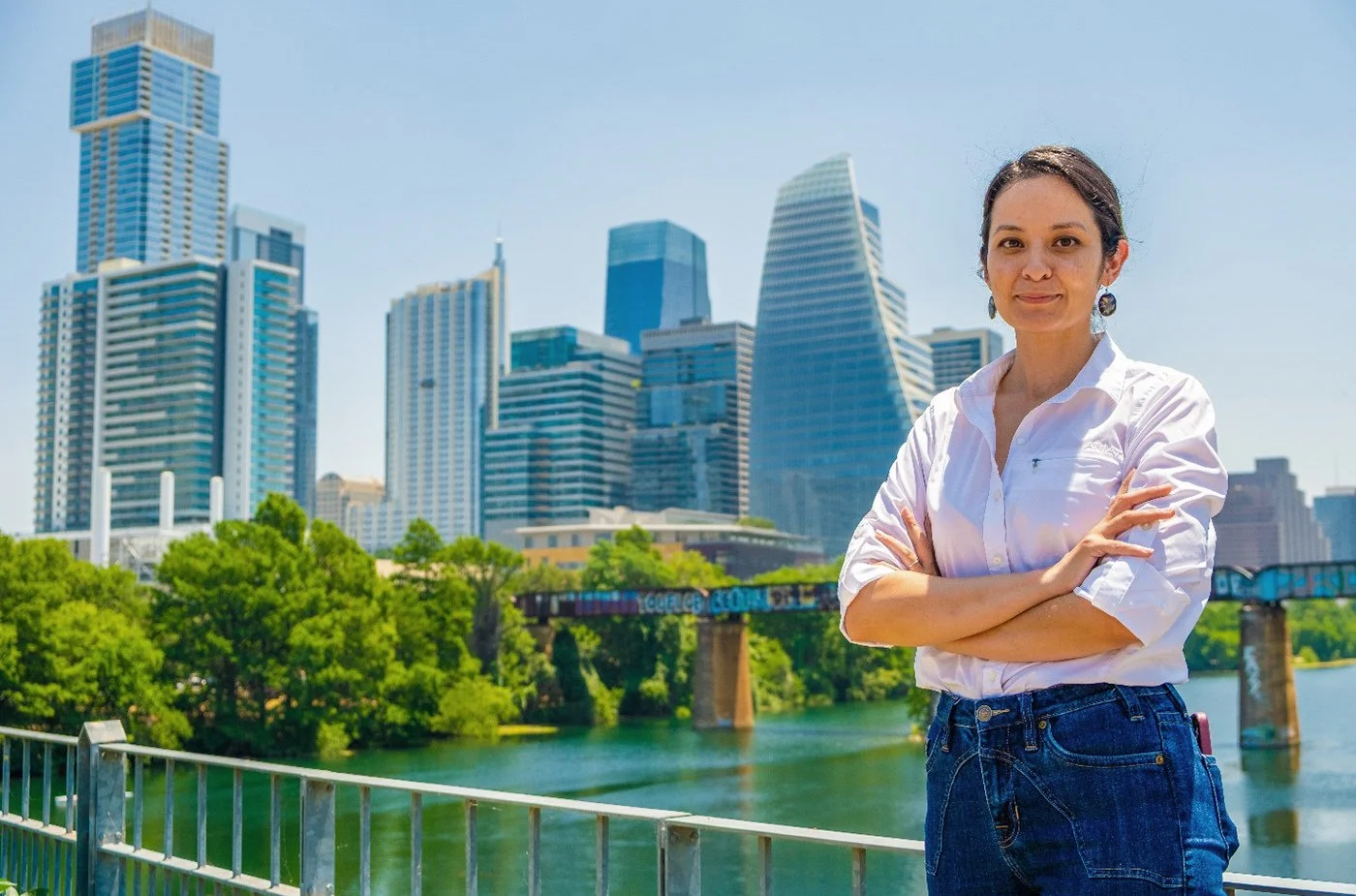
As Texas storms grow stronger and floods come faster, new Atlas 14 rainfall data reveals just how much more concentrated our rainfall is expected to be. The City of Austin’s updated floodplain guidance shows that higher waters are already reshaping how we build and protect our communities. By exploring climate projections for Austin and adopting green infrastructure — from rain gardens to permeable pavements — each of us can help slow the surge and share in safeguarding Central Texas’ future. Marisa Flores Gonzalez has led many of these efforts to guide the city’s development plans.

THIS MISSION GUIDED BY

The expertise of Dr. Mary Poteet, Dr. Stuart Reichler, and Dr. Ruth Shear of
The University of Texas at Austin’s Freshman Research Initiative, Urban Ecosystems.
Subscribe to their Creekside Convos podcast for more!